How to Choose the Perfect Reading Floor Lamp for Your Space
So, you’re looking for that just-right reading floor lamp? The key is finding one that truly fits your life – your space, your style, and how you actually read. It’s about more than just light; it’s about creating a comfortable, functional, and aesthetically pleasing spot where you can unwind with a good book. Let’s dig into how to make that happen without getting overwhelmed by all the options out there.
Understanding Your Lighting Needs for Reading
Before you even look at a lamp, it’s super important to think about what you actually need it to do. Reading isn’t just about general illumination; it requires specific light quality to prevent eye strain and create a cozy atmosphere.
The Right Kind of Light: Brightness and Color Temperature
When we talk about reading light, we’re really focusing on two main characteristics: brightness and color.
Lumens: How Bright is Bright Enough?
Forget wattage for a moment – that’s about energy consumption. For brightness, you want to look at lumens. For reading, you’ll generally want a lamp that can produce anywhere from 450 to 800 lumens directed at your reading material. This isn’t a one-size-fits-all number, though. If you have excellent natural light during the day and just need a little boost in the evenings, you might lean towards the lower end. If your room is generally dim or your eyesight isn’t as sharp as it used to be, aiming for the higher end (or even slightly above 800) will be more comfortable. Many modern LED lamps come with adjustable brightness settings, which is incredibly handy, allowing you to fine-tune it based on the time of day or your current task.
Kelvin: The Warmth or Coolness of Light
Color temperature, measured in Kelvin (K), dictates whether the light appears warm (more yellow/orange) or cool (more blue/white). For reading, most people find something in the range of 2700K to 4000K to be ideal.
- 2700K – 3000K (Warm White): This creates a cozy, inviting atmosphere. It’s perfect for winding down in the evening, reading before bed, or if your room has a generally warm color scheme. It’s less harsh on the eyes for extended periods.
- 3500K – 4000K (Neutral White / Cool White): This offers a more energizing, daylight-like quality. It’s great if you need to focus intensely, perhaps for studying or if your reading involves intricate details. It can feel a bit more sterile than warm white but offers excellent clarity.
Avoid anything above 5000K for reading, as it tends to be too blue and can contribute to eye strain over time, especially in the evening when your body is naturally preparing for sleep. Again, lamps with adjustable color temperature are fantastic for flexibility.
Directional vs. Diffused Light
A good reading lamp should primarily offer directional light, meaning it focuses illumination directly onto your book or tablet. This minimizes glare and ensures the light is exactly where you need it. Many reading floor lamps feature an adjustable head or gooseneck arm for this purpose. While some lamps offer general room illumination (like an uplighter), this should be secondary to the focused beam for reading. A combination of both in a single lamp can be very versatile – an upward-facing light for ambient glow and a separate, adjustable arm for task lighting.
Assessing Your Space and Layout
The “perfect” lamp isn’t just about the light; it’s about how it fits into your actual living environment. This means considering size, placement, and how it interacts with your existing furniture.
Where Will It Live? Proximity to Your Reading Spot
Think about your favorite reading chair, sofa, or even bed. The lamp needs to be positioned close enough to effectively light your reading material without casting shadows from your head or hands. Typically, this means placing it slightly behind or to the side of your shoulder. Measure the distance from where you sit to the potential lamp placement. This helps you determine the necessary reach of the lamp arm or overall height.
Space Between Furniture
Is there enough room between your armchair and a side table? Will the lamp base interfere with foot traffic or other furniture? A narrow base might be better for tight spots, while a wider, more decorative base could work well in an open corner. If space is really at a premium, a lamp with a very slim profile or an arc lamp that can reach over furniture might be your best bet.
Room Size and Ceiling Height
A massive, imposing lamp can overwhelm a small room, just as a tiny, delicate one can get lost in a grand space.
- Smaller Rooms: Opt for lamps with a slender profile, a small footprint, or perhaps an arc lamp that effectively uses overhead space rather than floor space. A simple, functional design often works best.
- Larger Rooms: You have more freedom here. You can consider lamps with larger shades, more decorative bases, or multi-functional lamps that also serve as a piece of art or storage.
- Low Ceilings: Be mindful of the overall height. An exceptionally tall lamp can make a low ceiling feel even lower. Choose something that maintains a comfortable proportion.
- High Ceilings: You can certainly go for taller lamps that command attention, but ensure the light source itself isn’t too high, or it won’t effectively illuminate your reading area.
Existing Decor and Style
Your lamp shouldn’t stick out like a sore thumb. It should either complement your existing decor or introduce a deliberate, pleasing contrast.
Matching Your Aesthetic
Are you going for a minimalist, modern vibe? Look for lamps with clean lines, metal finishes (chrome, brushed nickel, black), and simple, often conical or drum-shaped shades. Is your home more traditional? Lamps with classic shapes, bronze or brass finishes, and fabric shades might be more appropriate. For a rustic or industrial feel, consider lamps with exposed bulbs (if well-shielded for reading), distressed metal, or wood accents.
Color and Finish
Think about the dominant colors and finishes in your room. If you have a lot of warm wood tones, a bronze or brass lamp can blend beautifully. If your palette is cool (grays, blues), brushed nickel or chrome might be a better fit. A pop of color in the lamp base or shade can also be a fantastic accent if your room is otherwise neutral. Don’t be afraid to mix metals if done intentionally – for example, pairing a matte black lamp with brass accents in other parts of the room.
Exploring Different Lamp Styles and Features
Once you have a handle on your needs and space, you can start looking at the actual lamps. There’s a huge variety, each with its own advantages.
Gooseneck Lamps: Flexible and Focused
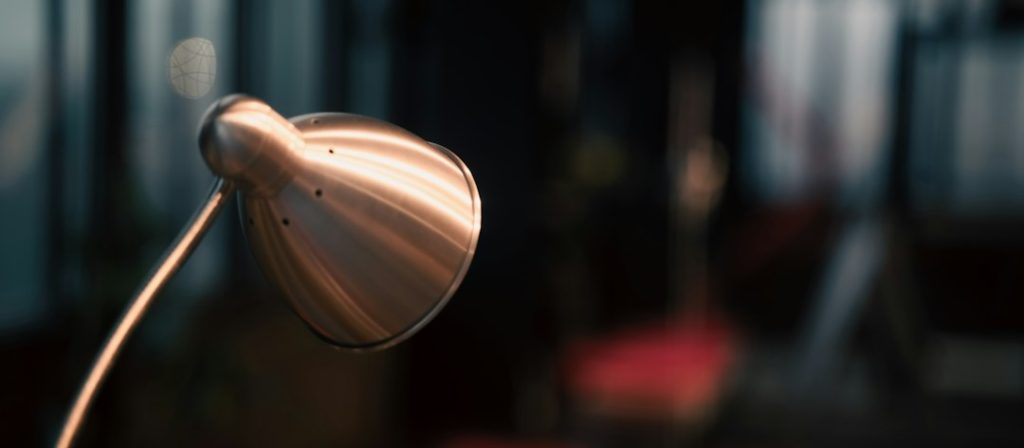
These are a classic for a reason. The flexible neck allows you to easily direct the light precisely where you need it, making them incredibly versatile for reading.
Pros:
- Maximum Adjustability: The gooseneck can be bent and twisted to put the light at almost any angle or height.
- Direct Illumination: Excellent for focused task lighting, minimizing glare on your book.
- Often Compact: Many gooseneck lamps have a relatively small footprint, making them suitable for tighter spaces.
- Variety of Styles: From sleek modern designs to more traditional looks.
Cons:
- May Lack Aesthetic Impact: Some designs can be purely functional and less decorative.
- Can Be Flimsy if Poorly Made: A cheap gooseneck might not hold its position well over time. Invest in quality.
- No Ambient Light: Typically provides only spot lighting, so you might need other light sources for general room illumination.
Arc Lamps: Reaching Over Furniture
Arc lamps are designed to extend over sofas or chairs, providing overhead light without needing a ceiling fixture or occupying precious side table space.
Pros:
- Space-Saving: The base can be positioned out of the way, while the light source arcs over your furniture.
- Statement Piece: Many arc lamps are visually striking and can serve as a focal point in a room.
- Even Illumination: Provides a broader, more even spread of light over a reading area compared to a spot lamp.
Cons:
- Require More Floor Space for the Arc: While the base might be out of the way, the arc itself needs clear overhead space.
- Can Be Large and Dominant: Might overpower smaller rooms or lower ceilings.
- Less Direct Adjustability: While the arc positions the light generally, the shade itself often has less fine-tuned directional control than a gooseneck.
Tree Lamps (Multi-Head Lamps): Versatility in One Unit
Tree lamps often feature multiple light sources on a single pole, sometimes with individual switches or adjustable heads.
Pros:
- Versatile Lighting: Can provide both ambient and task lighting if one head is directional and others point upwards or outwards.
- Cost-Effective: One lamp can serve multiple lighting needs.
- Individual Control: Often, each head can be switched on/off independently or adjusted for direction.
Cons:
- Can Be Bulky: Multiple heads can make the lamp feel larger and busier.
- Design Can Be Dated: Some older designs might not fit modern aesthetics.
- Limited Adjustability for Each Head: While multiple heads exist, each might not have the extreme flexibility of a gooseneck.
Shelf Lamps: Function and Storage Combined
These lamps integrate shelves into their design, offering a practical spot for books, drinks, or small decor items.
Pros:
- Multi-functional: Combines lighting with storage, ideal for small spaces.
- Space-Saving: Eliminates the need for a separate side table.
- Anchor for the Room: Can serve as a small corner piece with both utility and light.
Cons:
- Light Placement Can Be Fixed: The light source might not be as adjustable as a dedicated reading lamp.
- Dust Accumulation: Shelves can collect dust and clutter.
- Requires Careful Styling: Can look messy if not organized well.
Smart Features and Controls
Modern lamps offer a host of features that can greatly enhance your reading experience.
Dimmer Switches: Essential for Comfort
A dimmer switch is practically non-negotiable for a good reading lamp. It allows you to adjust the brightness to suit different times of day, levels of fatigue, or types of reading material. Look for smooth dimming rather than stepped options for the best experience.
Adjustable Color Temperature: The Best of Both Worlds
Some high-end LED lamps allow you to switch between warm and cool light (e.g., from 2700K to 4000K). This is incredibly useful for adapting the light to different moods or tasks throughout the day. Warm for relaxing, cooler for focused work.
Remote Controls and Smart Home Integration
Many lamps now come with remote controls, letting you adjust brightness and color temperature without getting up. Even better, some integrate with smart home systems (like Google Home, Amazon Alexa, Apple HomeKit), allowing voice control or scheduling. This adds a layer of convenience that’s hard to beat.
USB Charging Ports
A built-in USB port in the base or pole of a floor lamp is a thoughtful addition for charging your phone, e-reader, or tablet right at your reading spot.
Materials, Durability, and Safety
The construction of your lamp matters, not just for aesthetics but for longevity and safety.
Quality of Materials
A well-made lamp feels sturdy and looks refined. Pay attention to the materials used in the base, pole, and shade.
Metals: Durability and Finish
- Steel, Iron, Brass, Bronze, Aluminum: These are common and generally durable. Look for solid construction rather than hollow, flimsy pieces. The finish should be even and resistant to chipping or scratching. Brushed finishes tend to hide fingerprints better than polished ones.
- Weight: A heavier base often indicates better stability, especially for taller or arc lamps.
Shades: Directing and Diffusing Light
- Fabric Shades: Linen, cotton, silk are common. They offer a softer, more diffused light. For reading, ensure the fabric doesn’t absorb too much light and that the interior is light-colored to reflect maximum light downwards.
- Metal Shades: Often found on industrial or modern lamps. They provide very direct, focused light. The interior is typically painted white or silver for reflection.
- Plastic/Acrylic Shades: Can be lightweight and offer various levels of diffusion. Quality varies widely; look for sturdy, non-yellowing materials.
- Glass Shades: Can be elegant but fragile. Often used for uplighters or general ambient light. For reading, you’ll want clear or frosted glass that directs light effectively.
Stability and Base Design
This is crucial, especially if you have pets or small children.
Heavy and Wide Bases
A wide, heavy base prevents the lamp from easily tipping over. This is particularly important for arc lamps where the weight is distributed unevenly. Look for lamps with a low center of gravity.
Pole Construction
The pole should be stable and not wobble when touched. Joined sections should fit tightly.
Electrical Safety and Certifications
Always check for safety certifications. In North America, this often means UL (Underwriters Laboratories) or ETL (Electrical Testing Laboratories) listings. These ensure the lamp meets recognized safety standards for electrical components.
Bulb Compatibility
Ensure the lamp supports the type of bulb you prefer (LED, incandescent, CFL). Most modern reading lamps are designed for LEDs, which are energy-efficient, long-lasting, and offer excellent light quality. If the lamp doesn’t come with a bulb, check the recommended wattage or lumen output.
Budget and Where to Buy
Finally, let’s talk about getting this lamp into your home.
Setting Your Budget
Reading floor lamps vary wildly in price, from under $50 to several hundreds or even thousands for high-end designer pieces.
- Under $100: You can find functional, decent-quality lamps, especially simple gooseneck or basic tree lamps. Focus on core functionality and decent build quality rather than extensive features or high-end aesthetics.
- $100 – $300: This is the sweet spot where you start seeing better materials, more sophisticated designs, integrated smart features (dimmers, color temp control, USB ports), and more stable construction. You’ll find many excellent options here.
- $300+: Here you’re looking at designer lamps, premium materials (solid brass, marble bases), advanced smart home integration, and exceptional craftsmanship. These lamps often double as statement furniture pieces.
It’s usually worth investing a bit more in a reading lamp because it’s something you’ll use frequently, and a good one genuinely improves your comfort and reduces eye strain.
Where to Shop: Online vs. In-Store
Both have their advantages, depending on what you prioritize.
Online Retailers
- Pros: Vast selection, often better prices due to lower overhead, easy comparison shopping, customer reviews provide valuable insights. Many retailers offer free shipping and returns.
- Cons: Can’t physically see the lamp, assess its stability, or truly judge its finish and scale in person. Returns can be a hassle for large items.
- Tips: Read reviews carefully, especially those that mention stability, light quality, and ease of assembly. Check return policies before buying. Use augmented reality features if available on retailer apps to visualize the lamp in your space.
Brick-and-Mortar Stores
- Pros: You can see the lamp in person, feel its weight, test its stability, and get a better sense of its true color and finish. Sales associates can offer advice. No waiting for shipping.
- Cons: Limited selection compared to online, potentially higher prices, and can be time-consuming to visit multiple stores.
- Tips: Bring photos of your room and measurements of your reading area. Test the dimmer, adjustability, and overall feel.
Ultimately, choosing the perfect reading floor lamp is about balancing practical needs with personal style. Take your time, consider all the factors, and you’ll find a lamp that not only illuminates your books but also enhances your living space and makes every reading session a true pleasure.